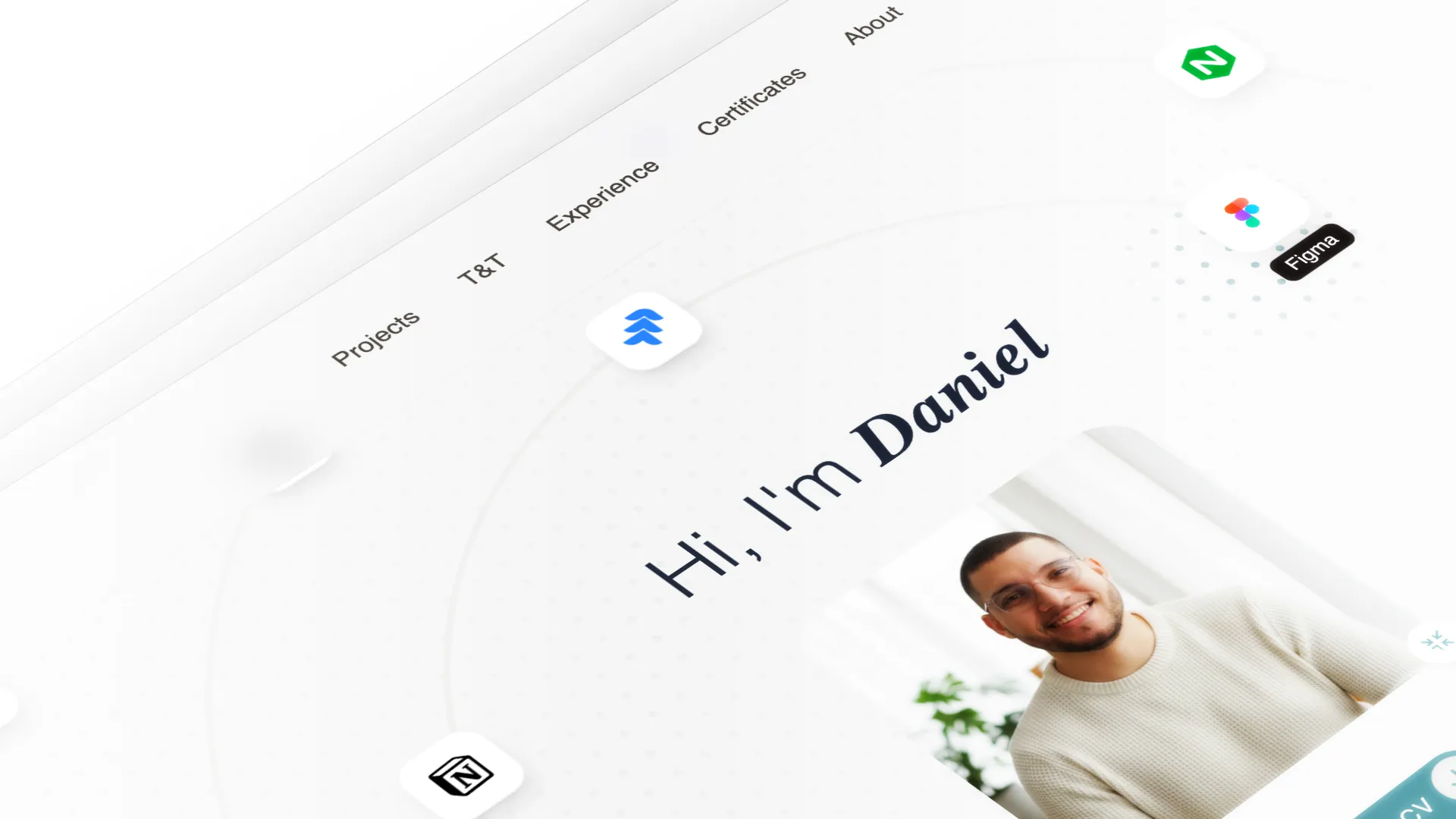
Portfolio
Personal portfolio designed in Figma and built with Astro, featuring orbital skill animations, i18n support, dark mode, interactive dot grid, and GSAP-powered transitions.
Overview
This portfolio is my digital home — a place to showcase not just what I build, but how I build it. Every interaction, animation, and layout decision was intentional, designed from scratch in Figma and brought to life with Astro’s island architecture.
A portfolio should practice what it preaches. If you claim to care about performance and design, your own site should prove it.
The Problem
Most developer portfolios fall into two camps: either they’re over-engineered React SPAs that take seconds to load, or they’re static templates with no personality. I wanted something in between — blazing fast, visually distinctive, and technically interesting without sacrificing accessibility or performance.
Design
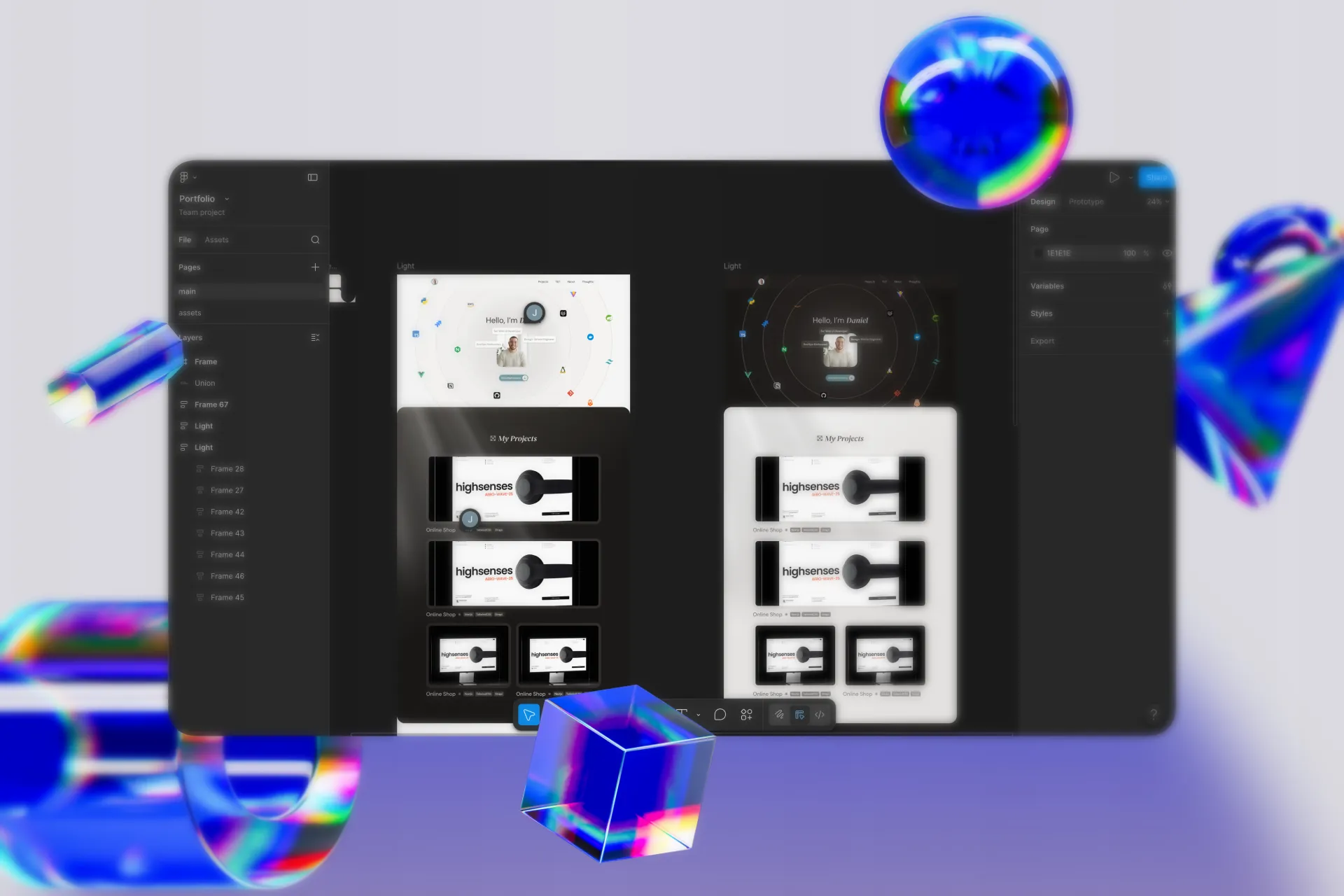
Everything started in Figma — from the layout grid and color palette to the orbital animation concept and component breakdowns. Having a complete design system before writing any code kept development focused and fast.
Goals
- Design a unique visual identity from scratch in Figma
- Achieve near-perfect Lighthouse scores across all categories
- Support full internationalization (English/Spanish)
- Implement smooth, performant animations that respect
prefers-reduced-motion - Build with a modern stack that keeps bundle size minimal
- Ensure full accessibility compliance (WCAG 2.1 AA)
Tech Stack
| Technology | Role |
|---|---|
| Astro | Static site framework with island architecture |
| TailwindCSS v4 | Utility-first styling with custom dark mode variant |
| GSAP | Imperative animations for orbital motion and reveals |
| React | Interactive islands (DotGrid canvas, WebGL effects) |
| TypeScript | Type safety across components and i18n system |
| Figma | Full design system and prototyping |
Architecture
The site follows Astro’s content-driven approach with a custom i18n layer:
src/
├── components/     # Astro + React interactive islands
├── content/        # Markdown collections (blog, projects)
├── i18n/           # Type-safe translation system
│   ├── locales/    # en.ts, es.ts
│   └── index.ts    # getLocaleFromUrl, useTranslations
├── layouts/        # Layout, BlogPost, ProjectDetail
├── pages/          # File-based routing with locale prefixes
└── styles/         # Global CSS with Tailwind directives
The i18n system uses typed translation keys derived from the English locale, ensuring compile-time safety when adding or using translations. Content collections support locale-prefixed IDs (en/portfolio, es/portfolio) for seamless bilingual content.
Key Features
Orbital Skill Animation
The hero section features skills orbiting in concentric rings, animated with GSAP. Each orbit has its own speed and direction, creating a living, breathing visualization of my tech stack.
Interactive Dot Grid
A React-powered canvas renders thousands of dots that react to cursor proximity with configurable resistance. The component uses requestAnimationFrame with an IntersectionObserver to pause when off-screen, ensuring zero wasted cycles.
Dark Mode with FOUC Prevention
Class-based dark mode with a synchronous inline script that reads localStorage before the first paint, preventing any flash of unstyled content. A MutationObserver bridges the theme state to React islands.
Reveal Animations
Scroll-triggered reveal animations using IntersectionObserver with staggered delays. Elements fade and translate into view as the user scrolls, with graceful degradation for users who prefer reduced motion.
Challenges & Solutions
Challenge: Theme Reactivity in React Islands
Astro’s island architecture means React components hydrate independently. When the user toggles dark mode via the Astro header, React islands had no way to know.
Solution: A MutationObserver watches the <html> element’s class list for dark changes, updating React state to trigger re-renders with the correct theme colors.
Challenge: i18n Without a Framework
Rather than pulling in a heavy i18n library, I built a lightweight typed system. The challenge was keeping translations type-safe while supporting dynamic locale resolution from URLs.
Solution: The en.ts locale serves as the source of truth for TranslationKey types. A useTranslations(locale) function returns a typed t() helper, and getLocalizedPath() handles URL locale switching.
Challenge: Performance with Heavy Animations
GSAP orbital animations and canvas rendering can strain lower-end devices. The site needed to look impressive without being unusable.
Solution: prefers-reduced-motion media queries disable animations entirely for users who opt out. Canvas animations pause via IntersectionObserver when scrolled out of view. The result: 60fps on modern hardware, graceful fallback everywhere else.
Performance
| Metric | Score |
|---|---|
| Performance | 98 |
| Accessibility | 100 |
| Best Practices | 100 |
| SEO | 100 |
Lessons Learned
- Design first, code second — Having a complete Figma design before writing any code eliminated decision paralysis during development.
- Islands architecture is powerful — Astro’s approach of shipping zero JS by default and hydrating only interactive components keeps the bundle tiny.
- Accessibility is a feature, not an afterthought — Building with a11y in mind from day one (skip links, ARIA labels, keyboard nav) is far easier than retrofitting.
- Simple i18n can be type-safe — You don’t need a heavyweight framework to get compile-time translation key safety.
What’s Next
- Add project case study narratives with rich media
- Implement view transitions between pages
- Add a contact form with serverless function backend
- Integrate analytics with privacy-respecting tooling
- Create an RSS feed for blog posts